Call Us Today: +1 866 205 2414
Global copper demand is rising at a pace that few analysts predicted even a decade ago. Electrification across transportation, renewable energy expansion, and massive upgrades to power transmission infrastructure are pushing demand higher every year. At the same time, the rapid growth of digital infrastructure, including artificial intelligence and hyperscale data centers, is creating additional pressure on electrical systems that rely heavily on copper.
These trends are occurring simultaneously and accelerating. Governments are introducing aggressive decarbonization policies, automakers are scaling electric vehicle production, and utilities are rebuilding aging power grids to support new energy systems. Each of these developments requires copper-intensive infrastructure.
The challenge is that the new copper supply cannot be brought online quickly enough through traditional greenfield development alone. Discovering and permitting new mines can take more than a decade, and capital costs for large projects continue to rise. Even when deposits are identified and projects are economically viable, infrastructure requirements and regulatory reviews can significantly extend development timelines.
In an environment where demand is expanding quickly, the industry must find ways to increase production more rapidly. One of the most practical and immediate solutions lies in the mines already operating.
Brownfield expansions—projects that increase capacity at existing operations—are emerging as one of the fastest ways to deliver additional copper supply to the market.
Brownfield expansion projects benefit from advantages that greenfield developments simply cannot replicate. Existing mines already have many of the foundational elements required for production. Roads, power infrastructure, water systems, and workforce accommodations are already in place. Processing plants are operating, supply chains are established, and permitting frameworks typically exist within the current operational footprint.
These conditions dramatically reduce the time required to expand production compared to building an entirely new mine.
For example, expanding a concentrator’s throughput capacity may require upgrading grinding circuits, flotation systems, or materials handling infrastructure. While these projects require detailed engineering and careful integration with ongoing operations, they do not require the same level of environmental review or infrastructure construction as a new development.
Similarly, upgrading pumping systems, improving slurry transport efficiency, or modifying crushing circuits can increase plant capacity without expanding the mine’s overall footprint. These improvements allow operators to process more material and extract more copper from existing deposits.
Because brownfield expansions build upon existing infrastructure, development timelines are often measured in years rather than decades. In a market where copper demand continues to accelerate, that speed becomes critically important.
One of the most powerful opportunities within brownfield projects lies in throughput optimization. Many processing plants operate below their theoretical capacity due to constraints within specific stages of the processing circuit. These bottlenecks may arise from equipment limitations, outdated control systems, or inefficiencies within grinding and flotation processes.
Identifying these constraints requires detailed engineering analysis and operational data. Once bottlenecks are understood, targeted upgrades can unlock additional capacity across the plant.
Grinding circuits often represent a major opportunity for improvement. Upgrading mills, improving classification systems, or modifying grinding media strategies can increase throughput while maintaining product quality. Similarly, flotation systems can be optimized through improved cell design, better reagent management, or upgraded control systems that improve recovery rates.
Materials handling systems also play a critical role in overall plant capacity. Conveyors, crushers, and pumping systems must operate efficiently to ensure that material moves through the processing circuit without interruption. Even modest improvements in these systems can allow plants to process significantly larger volumes of ore.
When these improvements are implemented together, the cumulative effect can be substantial. Processing plants that initially appeared constrained by design limitations may discover that meaningful increases in production are achievable through targeted engineering and operational improvements.
While brownfield projects offer significant advantages in terms of speed and cost efficiency, they also introduce unique operational challenges. Expanding production within an active mining operation requires careful coordination between construction activities and ongoing production.
Processing plants cannot simply shut down for extended periods while upgrades are installed. Mining operations rely on continuous production to maintain revenue streams and operational stability. As a result, expansion projects must be designed to integrate seamlessly with existing operations.
This integration often requires phased construction strategies. Equipment upgrades may be installed during scheduled maintenance shutdowns, allowing new systems to be brought online without interrupting production for extended periods. Temporary bypass systems or parallel processing circuits may also be used to maintain throughput while upgrades are completed.
Safety considerations are also critical. Construction teams and operational personnel must work within the same facility, often in close proximity. Clear communication, defined work zones, and disciplined planning are essential to ensure that expansion activities do not create hazards for plant personnel.
Managing these complexities requires experienced engineering teams and strong coordination between project managers, operations leadership, and contractors. When executed successfully, brownfield expansions can deliver significant production gains without compromising operational stability.
Brownfield expansions require more than simply adding new equipment to an existing facility. Successful projects depend on careful evaluation of how new infrastructure will interact with existing systems.
Processing plants operate as integrated systems where changes in one part of the circuit can affect performance elsewhere. Increasing grinding capacity, for example, may require modifications to flotation circuits, pumping systems, or tailings management infrastructure. Without these supporting upgrades, improvements in one area may simply shift bottlenecks to another stage of the process.
Energy infrastructure is another important consideration. Expanding plant capacity often increases electrical demand, requiring upgrades to power distribution systems or additional transformer capacity. Water management systems may also require modification to support higher throughput.
Engineering teams must therefore evaluate the entire processing system rather than focusing solely on individual equipment upgrades. Detailed process modeling and operational data analysis help identify how improvements in one area will affect overall plant performance.
This systems-level perspective ensures that expansion projects deliver meaningful increases in copper output rather than incremental improvements that fail to address broader constraints.
As global copper demand continues to accelerate, the mining industry will need to rely on a combination of strategies to increase supply. Greenfield discoveries will remain essential for long-term growth, but the reality is that new mines take time to develop. Permitting processes, infrastructure development, and capital investment requirements mean that many projects will not reach production for years.
Brownfield expansions offer a faster path forward. By leveraging existing infrastructure and operational experience, mining companies can deliver additional copper supply more quickly and often at lower capital intensity.
In many cases, these expansions represent the most practical near-term solution for closing the copper supply gap. Incremental production gains across multiple operations can collectively deliver millions of tonnes of additional supply over time.
The challenge lies in executing these projects efficiently while maintaining safe and stable operations.
As mining companies pursue brownfield expansion opportunities, the importance of disciplined engineering and project management becomes increasingly clear. Expanding production within operating facilities requires careful planning, detailed cost estimating, and strong project controls to ensure upgrades are delivered safely and efficiently.
TMG works alongside mining companies to support the planning and execution of brownfield expansion projects. Through services such as engineering study support, project controls, cost estimating, and owner’s team representation, TMG helps clients evaluate expansion opportunities and deliver projects that increase production capacity.
By strengthening project planning and maintaining disciplined execution frameworks, TMG helps mining organizations bring additional copper supply to market while managing operational risk.
The global copper supply challenge will not be solved by new discoveries alone. Brownfield expansions and throughput optimization projects will play a central role in increasing production over the coming years.
Mining companies that can identify expansion opportunities and execute them efficiently will be well-positioned to respond to accelerating demand.
Speak to a TMG expert today to learn how disciplined engineering and project planning can help unlock additional copper production from your existing operations.

President
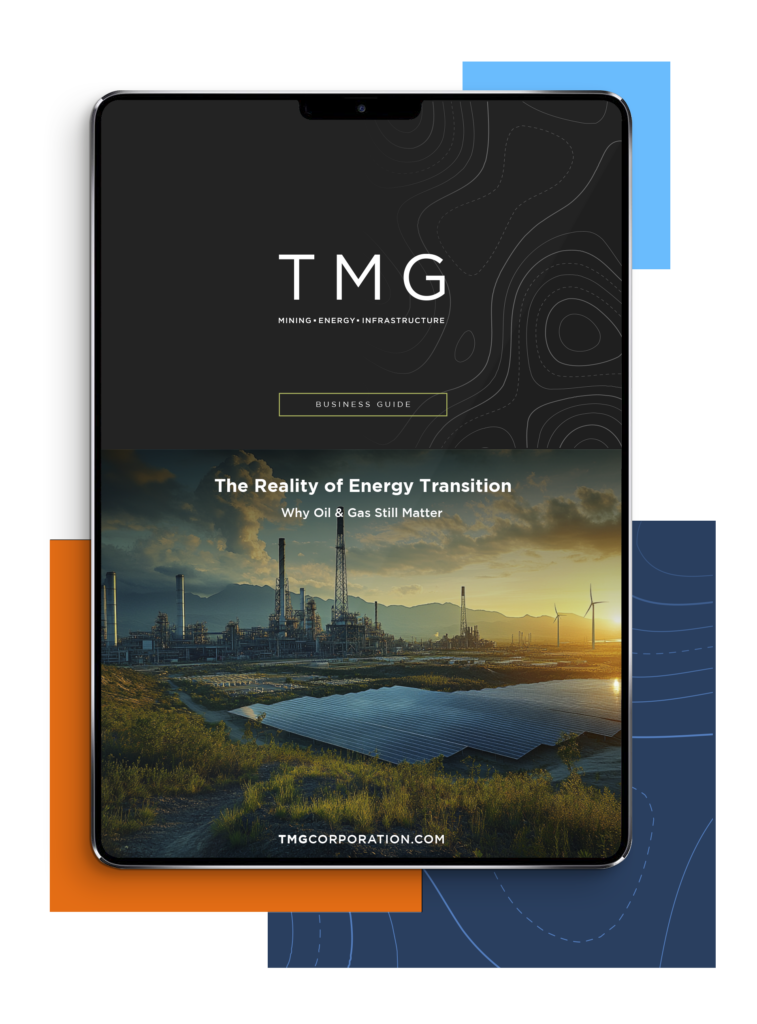
Kenny MacEwen is President of TMG and a senior execution leader with over two decades of experience delivering complex projects across the mining, energy, and infrastructure sectors. With a foundation in mechanical engineering and a track record spanning both Owner and consulting roles, Kenny has led multidisciplinary teams through all phases of the project lifecycle—from early studies and permitting support through detailed engineering, construction, and commissioning. His experience includes overseeing large-scale programs at New Gold and Centerra Gold Inc., where he aligned technical, commercial, and operational objectives across high-value global portfolios.
At TMG, Kenny leads the integration of project delivery frameworks that support Owner-side governance, stakeholder engagement, and cross-functional execution. He is deeply involved in developing workface planning models, ensuring interface risks are actively managed, and advancing readiness strategies that position assets for seamless transition to operations. His leadership extends across EPC coordination, budget stewardship, and the application of risk-adjusted scheduling tools to maintain project momentum. Kenny is recognized for fostering team cohesion in high-pressure environments while ensuring technical rigor and delivery accountability remain front and center.